Excavation and Archaeology - Digging the Floor
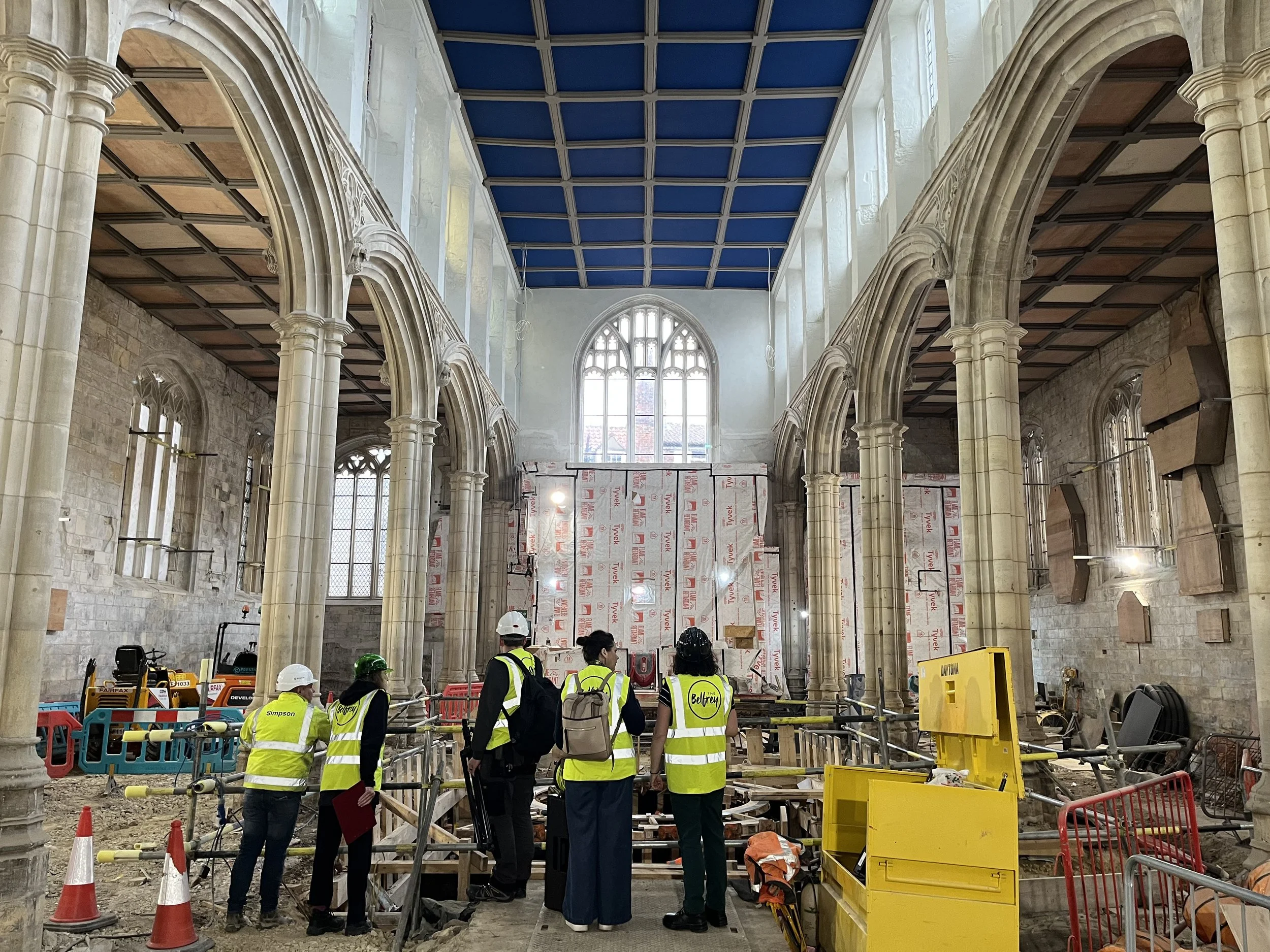
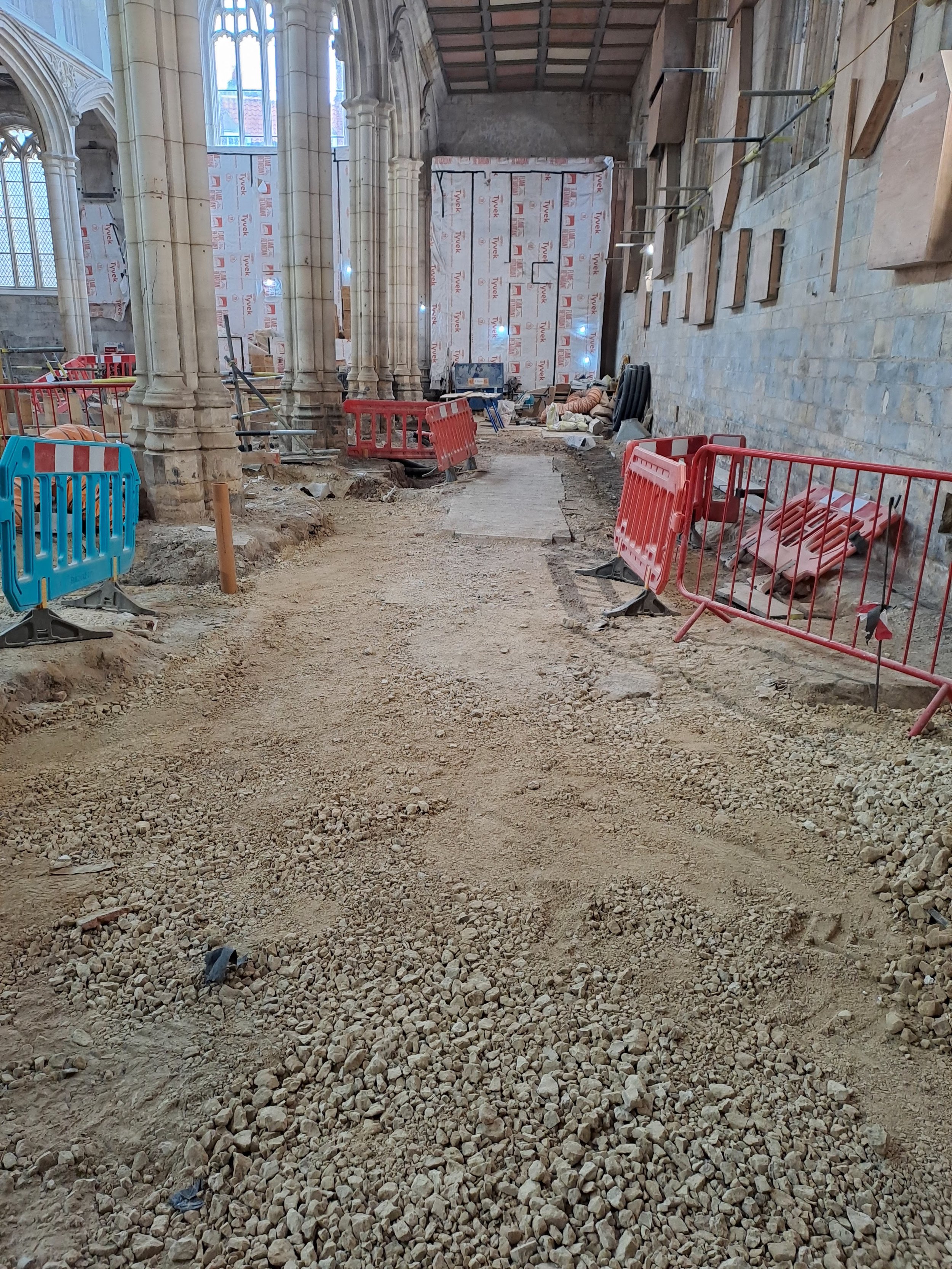
The last few months have finally revealed the floor! Or rather, what will be the floor… For now it is very much a building site in appearance.
The significant amount of repairs on the roof are now complete. This is great news as it was a larger part of the project than had been anticipated, requiring more time, money and wood - huge oak beams which were carved by an expert to be able to fit perfectly into the old timberwork that was suitable to retain.
Thanks to this progress, the internal scaffolding has now been completely removed! Having been in place for about a year and a half it was so exciting to see the entirety of the space revealed - the open vista that St Michael le Belfrey was originally designed with in the early 16th century, before there was a balcony or static pews.
With the scaffolding down, we could finally excavate the floor!
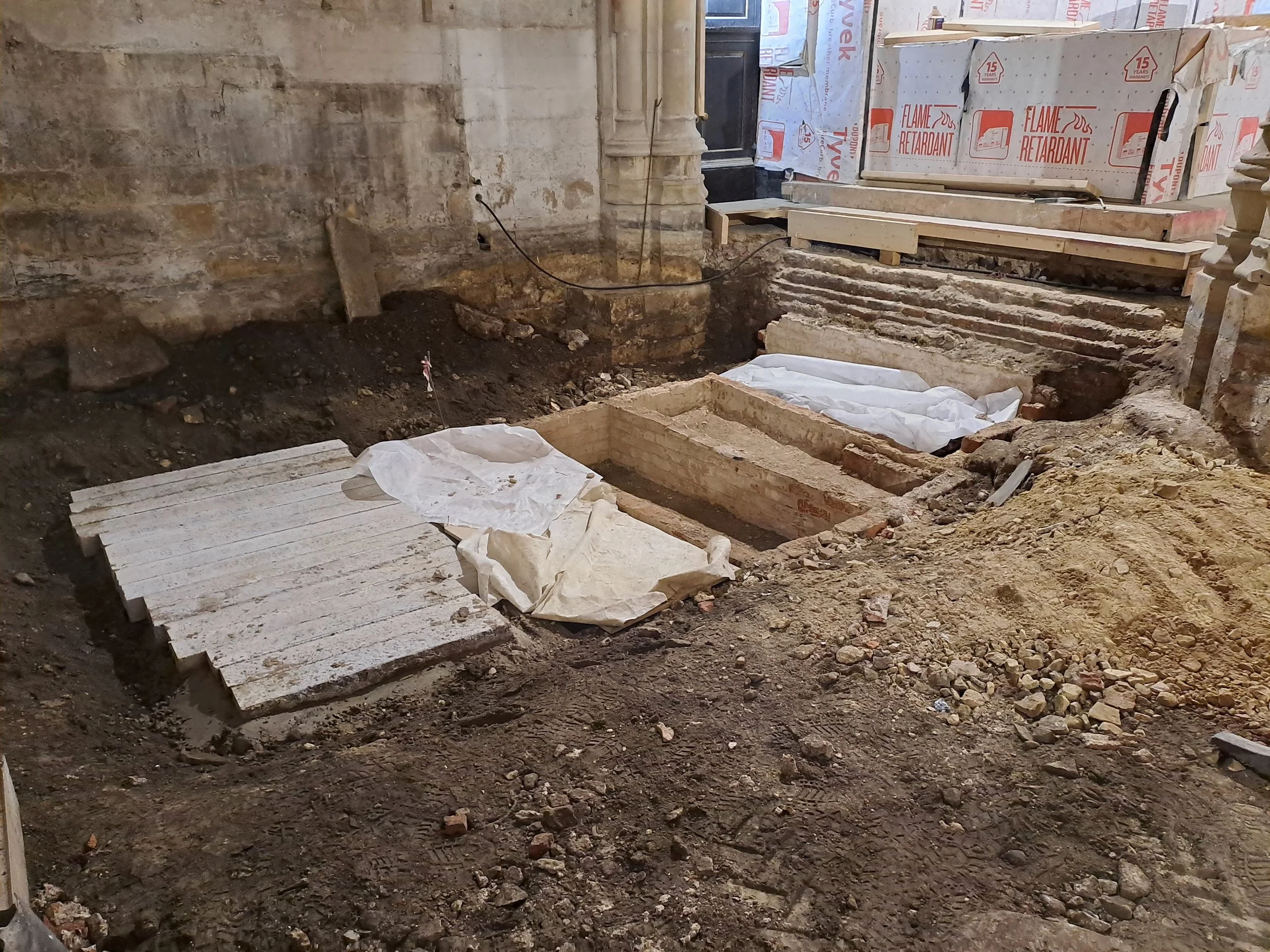
This is happening to allow structural stabilisation, the installation of central heating, and the building of an in-ground baptism pool. Section by section the ground has been carefully lowered to the required level, always with an archaeological watching brief in case any human remains, historic building features or artefacts were found.
In many parts of the church this revealed burial vaults, built of brick, to contain coffins. The vaults were all sorts of sizes, including one very small one which was sadly the resting place of an infant. Some of the coffins were made of lead, which was something of a surprise from a practical perspective as they needed to be carefully moved to other parts of the building and are of course very heavy! The contractor, Simpson, did a brilliant job of appropriately and considerately reburying all of the coffins and remains; private services of blessing took place at regular intervals, led by our clergy team.
The locations and contents of the vaults are all recorded, wherever possible with identifying details from memorial stones; these details will be held in the Borthwick Institute for Archives at the University of York after Impact, and will therefore be available for study for many years to come.
Whilst cataloging these finds, the archaeologists have come across some interesting things. One of the team’s recent favourites was the skull of an adult male with evidence of a musket bullet wound. We don’t know when he lived or died, but there’s something special and humbling in the mystery of who came before us.